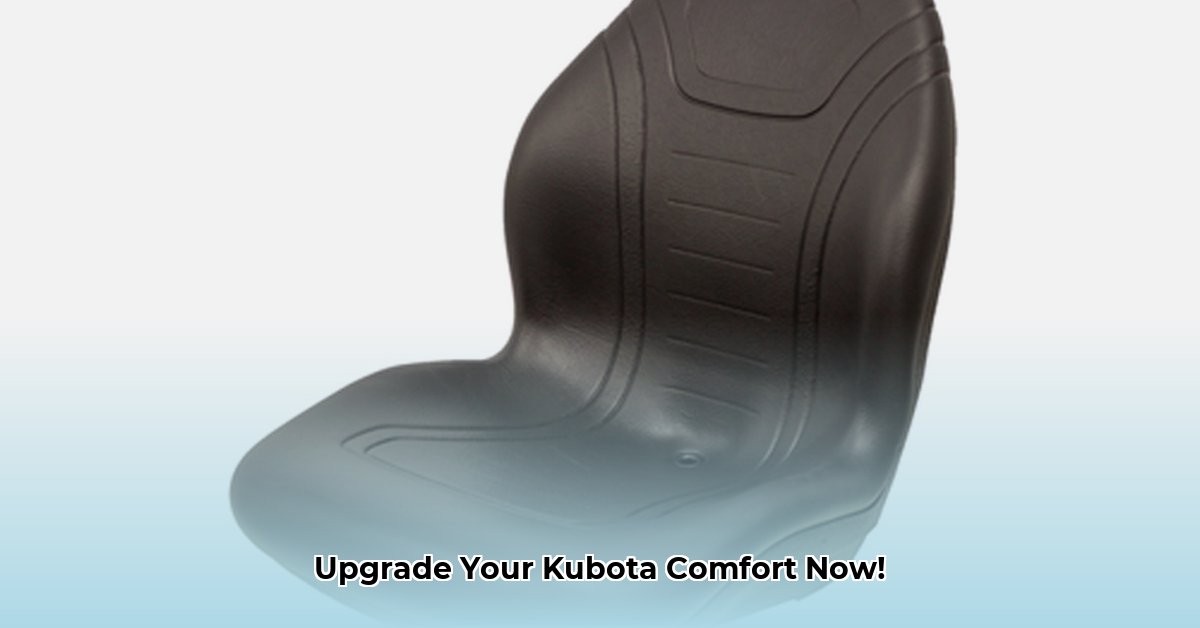
Finding the right replacement tractor seat can significantly impact your comfort, safety, and productivity. This comprehensive guide helps you select and install the perfect seat for your Kubota tractor, covering compatibility, OEM vs. aftermarket options, installation, and maintenance. For more detailed information on Kubota tractor seats, check out this helpful resource: Kubota Tractor Seats.
Understanding Kubota Tractor Seat Compatibility
Before you start shopping, precise identification of your Kubota model and year is crucial. This information, usually found on a plate on the tractor, determines seat compatibility. Kubota's official parts diagrams (accessible online or through your dealer) provide detailed specifications and mounting information. Aftermarket compatibility charts often exist, but always cross-reference with your tractor's specifications. Discrepancies can lead to poor fit and potential safety issues. Consulting your local Kubota dealer is advisable for older or less common models, ensuring a proper fit. Remember – an incorrect fit compromises safety and comfort.
OEM vs. Aftermarket Seats: A Comparative Review
Choosing between Original Equipment Manufacturer (OEM) and aftermarket seats involves trade-offs. OEM seats guarantee a perfect fit and usually come with a longer warranty. However, they often command a higher price. Aftermarket seats offer greater variety and potentially lower costs, but quality varies drastically. Always prioritize reputable suppliers with positive customer reviews, verifying compatibility meticulously before purchase.
| Feature | OEM Seat | Aftermarket Seat |
|---|---|---|
| Cost | Higher | Generally Lower |
| Warranty | Typically longer, backed by Kubota | Varies greatly; may be shorter or nonexistent |
| Fit | Guaranteed perfect fit | Requires diligent verification; measure carefully |
| Durability | Usually high, built to last | Quality varies significantly; read reviews! |
| Suspension | High-quality, often advanced designs | Ranges from basic to advanced; quality varies greatly |
| Comfort Features | Usually includes features based on model | Features vary widely depending on price point |
A poorly made aftermarket seat can compromise safety and lead to costly replacements. Thoroughly research potential suppliers, reading customer reviews and paying close attention to comments about durability and longevity.
Choosing the Right Seat: Prioritizing Your Needs
Your choice depends on your budget, desired features, and usage.
Budget: Establish a realistic budget before you begin. Prices range from budget-friendly to premium depending on features.
Suspension: Air suspension provides superior shock absorption, reducing fatigue, but it’s more expensive than mechanical suspension.
Adjustability: Height, angle, and lumbar support adjustments are essential for a personalized fit.
Comfort Features: Armrests, headrests, and heating/cooling options enhance comfort during prolonged use.
Reviews: Online reviews are invaluable; look for patterns in feedback on durability and comfort.
Consider these categories:
- Budget-Friendly: Basic suspension, limited adjustability. Suitable for occasional use.
- Mid-Range: Balanced price and features; mechanical suspension, some adjustability, possibly armrests.
- Premium: Air suspension, extensive adjustability, heating/cooling, ergonomic features. Ideal for frequent or long-duration use.
Installing Your New Seat: A Step-by-Step Guide
While seemingly straightforward, improper installation can compromise safety. If you lack mechanical experience, seek professional help.
Step 1: Preparation Disconnect the tractor's battery negative terminal. Gather necessary tools – wrenches, sockets, screwdriver. Consult the seat’s installation instructions.
Step 2: Removing the Old Seat: Photograph or meticulously note the removal process of the old seat, including cable connections and fasteners. Support the seat to prevent injuries.
Step 3: Installing the New Seat: Align the new seat with mounting points, securely fasten all hardware, and double-check your work. Never overtighten fasteners.
Step 4: Testing and Safety Check: Reconnect the battery. Adjust the seat and test its stability and functionality thoroughly. Test drive the tractor briefly to ensure everything functions correctly. Only operate the tractor with a securely installed seat.
Maintenance and Care: Extending the Life of Your Seat
Regular cleaning and occasional lubrication will extend your seat's lifespan. Consult your seat's manual for cleaning recommendations. Address minor issues promptly to avoid costly repairs.
Conclusion
Selecting the right Kubota tractor seat is a vital decision. This guide empowers you to make an informed choice, ensuring comfort, safety, and productivity for years to come. Remember, if uncertain about any step, consult a qualified mechanic.